TL;DR: MFTE, or Multifamily Tax Exemption, apartments are income-restricted homes in Seattle where property owners get a tax break in exchange for renting a portion of units below market rate to households under a set income limit. You qualify based on household size and income relative to the area median income, and buildings across Seattle, including The Fifteen in North Capitol Hill, set aside units for renters who meet those limits. Applying means finding available MFTE units, verifying your income documentation, and applying directly through the property’s leasing office.
Key takeaways
- Verify your household income against Seattle’s published area median income limits before touring any MFTE unit.
- Target neighborhoods with strong transit and walkability, like North Capitol Hill, to stretch an income-restricted rent further.
- Gather pay stubs, tax returns, and offer letters early so your application does not stall during income verification.
- Compare unit sizes and floor plans across MFTE buildings since income limits can vary by bedroom count and building.
- Contact leasing offices directly, such as The Fifteen, to confirm current mfte program availability before applying elsewhere.
What Is the MFTE Program in Seattle
MFTE stands for Multifamily Tax Exemption, a City of Seattle program that gives property owners a property tax exemption on the residential improvement value of a building in exchange for renting a share of units to income-qualified households at below-market rents. The program is administered by the Seattle Office of Housing and applies to specific buildings that opted in during construction or renovation, not every apartment in the city.
Why the Program Exists
Seattle created the MFTE program to encourage the development of housing that includes income-restricted units in walkable, transit-connected neighborhoods without relying solely on public subsidy. Developers get a temporary property tax break, typically for 12 years, and in return they commit a percentage of their units, often 20 to 25 percent, to renters earning under a defined income threshold. This structure means MFTE apartments are not run by a housing authority. You lease directly from the property, the same way you would a market-rate unit, but your rent and income are tied to the terms the building agreed to when it entered the program.
- Tax exemption. The building owner does not pay property tax on the residential improvement value for a set term.
- Set-aside units. A defined share of units in the building are reserved for income-qualified renters.
- City oversight. The Seattle Office of Housing monitors compliance and publishes the income and rent limits each year.
Is MFTE the Same as Low Income Housing
MFTE is often confused with subsidized or public housing, but it works differently. There is no rental subsidy paid to the landlord and no long waitlist run by a housing authority in most cases. Instead, the rent itself is set lower than market rate because the building owner is receiving a tax benefit, and the renter simply has to prove their income falls under the qualifying limit for their unit and household size. Because of this, MFTE tends to serve a wider range of incomes than traditional low income housing, including many renters who work full time but are priced out of market-rate units in walkable, well-located Seattle neighborhoods.
MFTE apartments trade a tax exemption for the building owner for a real rent reduction for a qualifying renter, and that trade is what keeps North Capitol Hill within reach.
How to Qualify for MFTE Housing
You qualify for MFTE housing in Seattle by having a total household income at or below a set percentage of the area median income for your household size, and by providing documentation that verifies that income before signing a lease. Qualification is based on gross household income from all occupants, not just the applicant on the lease.
Household Size and Income Documentation
Property managers calculate your household income using everyone who will live in the unit, including co-signers or additional adult occupants. This differs from a standard rental application, where only the leaseholder’s income might be considered for a rent-to-income ratio. You will need to submit documentation that proves current income, and most Seattle MFTE buildings ask for a combination of the following before they will approve an application.
- Recent pay stubs. Usually the last two to three months of pay stubs for every working household member.
- Tax returns. Prior year federal tax returns, sometimes requested if income has changed significantly.
- Offer letters. For new jobs, an offer letter with salary and start date can substitute for pay stubs.
- Asset documentation. Some buildings ask about savings or investment income if it affects total household income.
Other Qualifying Factors
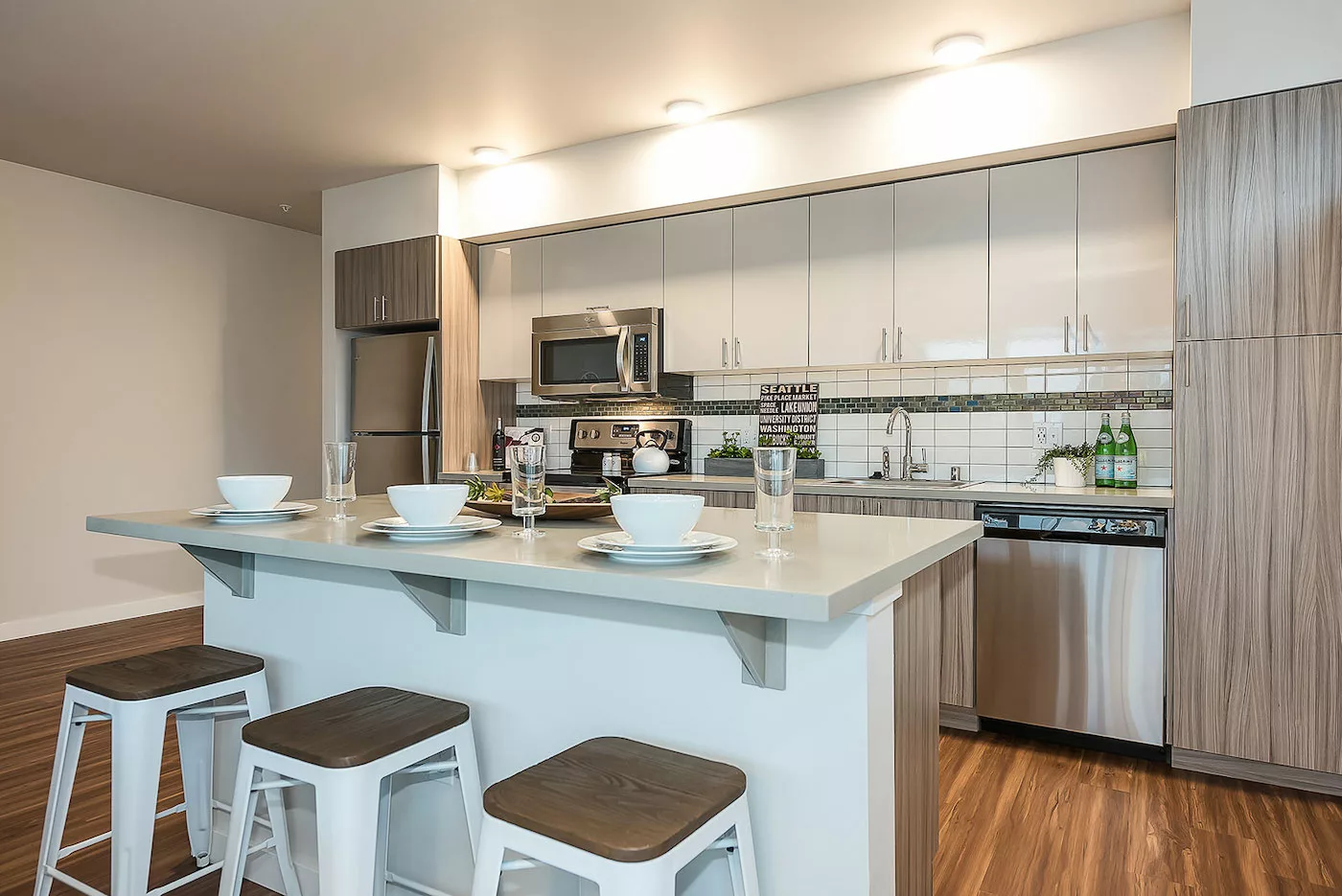
Beyond income, MFTE applications go through the same screening a market-rate unit would, including credit and rental history review. Washington state law under RCW 59.18.030 allows applicants to use a Comprehensive Reusable Tenant Screening Report, which can save money and time if you are applying to multiple buildings. Some renters assume MFTE units come with different lease terms or fewer amenities, but in most Seattle buildings the income-restricted units are the same floor plans and finishes as market-rate units, simply leased to a household that meets the income limit.
| Feature | MFTE Apartments | Market-Rate Apartments |
|---|---|---|
| Eligibility | Household income must fall under a set percentage of area median income | No income qualification required |
| Rent | Set below market rate based on income tier and unit size | Set by current market demand |
| Application process | Requires income documentation and verification before lease signing | Standard application and screening only |
| Availability | Limited number of units per building, often waitlisted | Typically wider selection of open units |
| Lease renewal | May require annual income recertification | No income recheck at renewal |
MFTE Income Limits in Seattle
MFTE income limits in Seattle are set as a percentage of the area median income, commonly ranging from 40 to 90 percent of AMI depending on the building and unit, and the dollar figures are updated annually by the Seattle Office of Housing. Because these limits change each year and vary by household size and unit type, the most accurate numbers always come directly from the Office of Housing’s published tables or from the leasing office of the specific building you are interested in.
How AMI Tiers Work
Area median income, or AMI, is calculated annually for the Seattle metro area by the U.S. Department of Housing and Urban Development. A building’s MFTE units might be set at 60 percent AMI, 65 percent AMI, or another tier the developer agreed to, and each tier corresponds to a specific maximum household income based on how many people live in the unit. A studio might have a different qualifying income than a two-bedroom, since larger households are generally allowed a higher income ceiling. This is why comparing floor plans matters just as much as comparing buildings when you are searching for MFTE apartments in Seattle.
- Studio units. Often paired with lower AMI tiers since they house smaller households.
- One and two-bedroom units. May allow higher income limits to reflect larger household sizes.
- Annual updates. AMI figures shift each year, so always confirm current numbers with the property before applying.
Where to Verify Current Numbers
Because income limits are not static, the safest approach is to check the Seattle Office of Housing’s MFTE program page directly, or ask the specific building’s leasing team for the current year’s income and rent chart for the unit type you want. Buildings that participate in MFTE, including those listed on mfte-seattle.com, typically post or share these charts as part of the application packet. Avoid relying on secondhand estimates from forums or older articles, since a figure that was accurate a year or two ago may no longer reflect the current AMI calculation.
Finding MFTE Apartments Across Seattle Neighborhoods
MFTE apartments exist in numerous Seattle neighborhoods, including Capitol Hill, First Hill, the University District, West Seattle, and increasingly in nearby cities like Renton, since developers throughout the region have opted into the program. Availability and income tiers vary building by building, so the best approach is to compare a shortlist of properties rather than assuming one neighborhood is universally cheaper.
Popular Areas for MFTE Listings
Search interest in MFTE apartments Seattle list and MFTE apartments West Seattle reflects how spread out the program has become. Buildings like Museum House and 101 Broadway in First Hill, and university-adjacent properties tracked by the University of Washington’s housing resources, all participate in some form of MFTE set-aside. Capitol Hill and North Capitol Hill stand out for renters who want walkability alongside an income-restricted rent, since the area combines a high Walk Score with direct access to multiple bus lines and the Capitol Hill light rail station, cutting down on transportation costs that can offset savings elsewhere.
- Capitol Hill and First Hill. Dense with dining, cafes, and quick transit connections to downtown.
- University District. Popular with renters near the University of Washington campus.
- West Seattle. A growing number of newer buildings with MFTE set-asides.
- Renton and nearby cities. Expanding MFTE-style programs outside Seattle’s city limits.
What Makes a Listing Worth Pursuing
Not every building marketed as affordable actually carries a formal MFTE designation, so it helps to confirm directly with the leasing office that a unit is part of the city program rather than assuming based on advertised pricing. A legitimate MFTE listing will reference income limits, the Seattle Office of Housing, or ask for income documentation as part of the application. When comparing available apartments across buildings, look closely at the floor plans offered under the MFTE set-aside, since not every unit type in a building is necessarily income-restricted. Some properties, like The Fifteen, apply MFTE availability across studios, one-bedrooms, and two-bedroom layouts, while others may limit the program to just one or two floor plans.
How to Apply for MFTE Housing
You apply for MFTE housing in Seattle the same way you apply for any rental: by contacting the leasing office, confirming current availability, and submitting income documentation alongside a standard rental application. There is no separate citywide MFTE application or waitlist system for most buildings, since eligibility is determined property by property.
Step-by-Step Application Process
Start by identifying buildings with MFTE availability that match your household size and income. From there, the process generally follows a predictable order, though specific requirements can vary slightly by property.
- Confirm eligibility. Compare your household income against the building’s published AMI limit for your unit size.
- Gather documents. Assemble pay stubs, tax returns, and any offer letters before you tour.
- Tour or inquire. Contact the leasing office to confirm which floor plans currently have MFTE units open.
- Submit an application. Provide income verification along with standard screening information, including a Comprehensive Reusable Tenant Screening Report if you have one.
- Sign the lease. Once approved, your lease will specify the MFTE rent and any annual recertification requirements.
Common Mistakes That Delay Approval
The most common reason an MFTE application stalls is incomplete or inconsistent income documentation, especially when a household includes more than one income earner or recent job changes. Submitting pay stubs that do not match the income stated on the application, or leaving out a co-occupant’s income, can slow down verification significantly. Another frequent issue is applying for a unit whose income limit does not match your household size. A one-person household and a three-person household can qualify at different income ceilings for the exact same floor plan, so it is worth double-checking the specific limit for your household before you apply, not just the general building limit.
MFTE at The Fifteen in North Capitol Hill
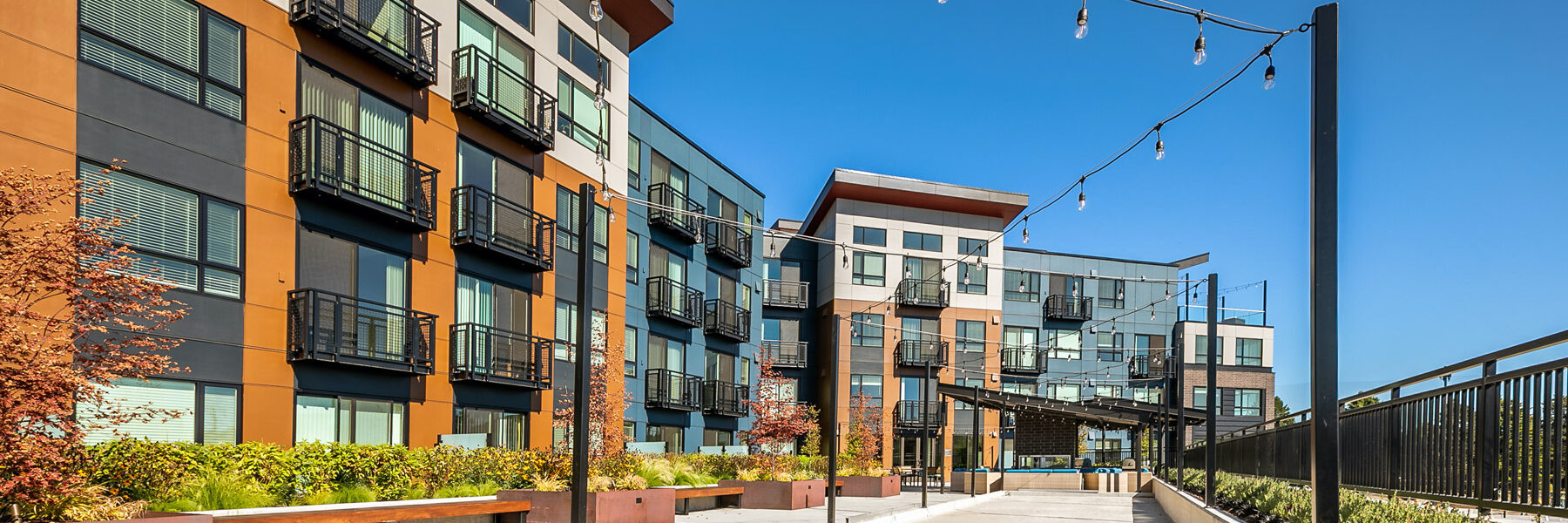
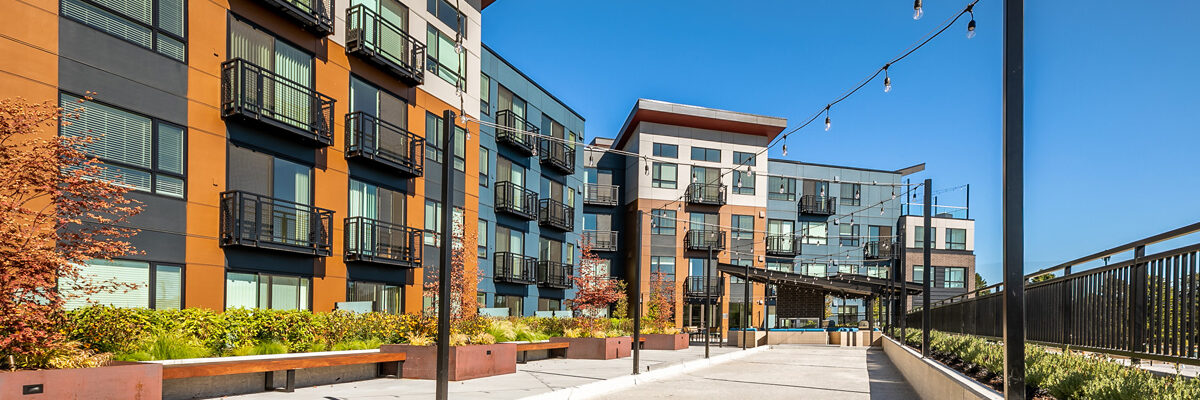
The Fifteen, located at 605 15th Avenue East in North Capitol Hill, offers MFTE income-restricted availability alongside its market-rate studios, one-bedroom, and two-bedroom homes, giving qualifying renters access to the same carbon neutral built design and rooftop garden terrace as every other resident. The building’s approach to MFTE reflects its broader philosophy: sustainable, well-designed housing should not be limited to one price point.
What Makes The Fifteen’s MFTE Units Distinct
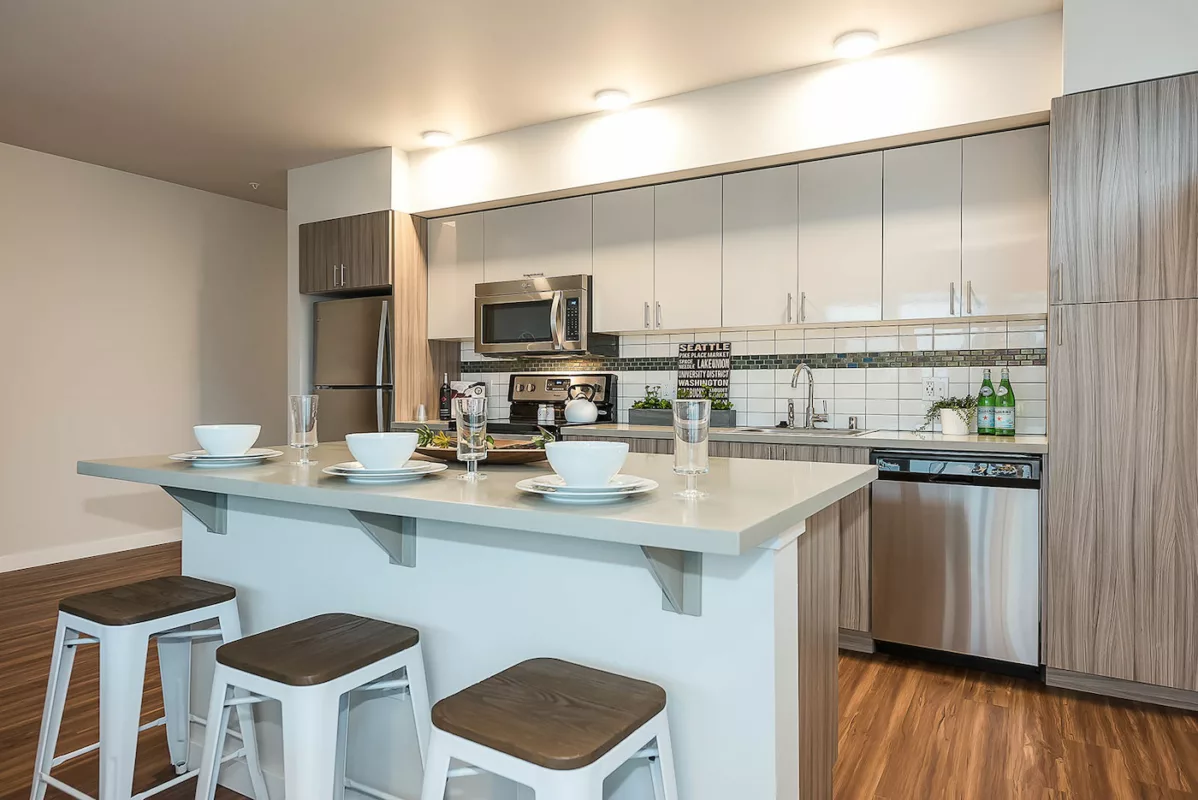
Unlike some buildings where income-restricted units are set apart in a separate wing or finish package, The Fifteen applies its mfte program across the same floor plans available to every resident, including Studio A at 391 square feet, Studio B at 390 square feet, and one-bedroom layouts ranging from 522 to 699 square feet. Two-bedroom options, including the 2 Bed 1 Bath C at 854 square feet and the 2 Bed 2 Bath B at 1,051 square feet, may also be available under the program depending on current openings. Every home at The Fifteen, MFTE or market rate, includes the same modern wood-look flooring, quartz countertops, Energy Star appliances, and passive cooling design that reduce both environmental impact and monthly utility costs. This means qualifying for an income-restricted unit here does not mean settling for a different set of amenities.
- Consistent finishes. Two-tone kitchen cabinets, quartz countertops, and LED lighting rated for roughly fifteen years across all units.
- Shared amenities. Full access to the rooftop garden terrace, controlled building access, and secured bike storage.
- Sustainable design throughout. Low and no VOC paints and low-flow water fixtures in every apartment, not just market-rate ones.
- Location advantages. A 92 Walk Score and proximity to bus lines, cycle share, and ZipCar reduce transportation costs.
Location and Cost of Living Context
North Capitol Hill sits within walking distance of neighborhood cafes and shops along 15th Avenue East, and the area’s transit access means many residents at The Fifteen rely less on a personal vehicle, which meaningfully affects overall monthly cost of living beyond just rent. With a 92 Walk Score and easy access to public transit, cycle share, and ZipCar, an MFTE lease here can stretch further than a comparably priced unit in a less walkable part of the city. Because pricing at The Fifteen is currently listed as call for pricing, and a current special offers 2 to 6 weeks free on select units, the most accurate way to understand what an MFTE lease would cost is to contact the leasing office directly. The team can confirm current income limits for each floor plan, walk through move in costs and fees, and explain how the sustainability features factor into long-term affordability.
Frequently Asked Questions
How do you qualify for MFTE housing in Seattle?
You qualify by having a total household income at or below the percentage of area median income set for your specific unit and household size, and by submitting income documentation such as pay stubs or tax returns during the application process.
What are the best MFTE apartments in Seattle?
The best MFTE apartments depend on your priorities, but strong options combine a legitimate income-restricted set-aside with walkability and transit access, such as buildings in Capitol Hill, First Hill, and North Capitol Hill, including The Fifteen, which applies MFTE availability across its studio, one-bedroom, and two-bedroom floor plans.
Is MFTE low income housing?
MFTE is not the same as traditional low income or subsidized public housing. It is a tax exemption program where building owners set aside units for renters under a defined income limit, often serving a broader income range than typical subsidized housing programs.
What is the MFTE income limit in Seattle?
MFTE income limits are set as a percentage of area median income, commonly between 40 and 90 percent of AMI depending on the building and unit type, and the exact dollar amounts are updated annually by the Seattle Office of Housing based on household size.
How do you apply for MFTE housing in Seattle?
You apply directly through the leasing office of a building with MFTE availability, submitting income documentation like pay stubs and tax returns alongside a standard rental application rather than through a separate citywide waitlist.
Are there MFTE apartments outside Seattle, like in Renton?
Yes, similar income-restricted programs have expanded to nearby cities including Renton, and searches for MFTE apartments Renton reflect growing interest in these options beyond Seattle’s city limits.
Do MFTE units have different amenities than market-rate units?
In many Seattle buildings, including The Fifteen, MFTE units share the same floor plans, finishes, and amenities as market-rate apartments, so qualifying for an income-restricted unit does not mean a different living experience.
Does MFTE eligibility need to be renewed every year?
Many MFTE leases require annual income recertification to confirm the household still falls under the qualifying income limit, so renters should keep updated income documentation on hand at each lease renewal.
Finding the Right MFTE Fit in Seattle
MFTE apartments give income-qualified renters a real path into well-located, well-built Seattle housing without sacrificing design or walkability, and understanding the income limits, documentation, and application steps ahead of time makes the process far smoother. Whether you are comparing buildings across Capitol Hill, First Hill, or West Seattle, confirming current AMI figures directly with each leasing office remains the most reliable way to know what you actually qualify for. At The Fifteen in North Capitol Hill, MFTE availability spans the same carbon neutral built studios, one-bedrooms, and two-bedroom homes offered to every resident, complete with a rooftop garden terrace, passive cooling, and a walk score that makes car-free living realistic. To check current MFTE availability, floor plans, and income limits, schedule a tour or apply now through The Fifteen’s leasing office.